


This project comprises a group of research tasks centered around the common use of in vitro culture techniques. They include:
Morphogenesis in vitro: Research on shoot regeneration and multiplication, rhyzogenesis, somatic embriogenesis and androgenesis are done on Allium schoenoprassum, Frittilaria meleagris, Iris reichenbachii, Arabidopsis thaliana, Pinus peuce, Pinus heldreichii and wheat, birds-foot trefoil and cabbage subspecies. Protocols designed for specific organogenesis pathways are elaborated and confirmed with cytological and histological studies. Effect of GA3 are studied in regeneration of spinach and bird-foot trefoil. Interaction of GA3 with other hormones is studied by use of light and scanning electron microscopy an in situ hybridization. Following the expression of genes for GA20 oxidase, KNOX/STM and LAS orthologues. Senescence and apoptosis are studied on tobacco leaves.
The Balkan Region represents one of the European major centers of plant diversity, with a substantial number of endemic genera and species. There is an urgent requirement to clarify and improve the methodologies and investigations that enable scientists to conserve, manage and utilize plants and their habitats in this region. We developed ex situ conservation strategies for selected rare and/or endangered plant species, to complement existing long-term in situ conservation efforts. The assessment of genetic diversity in extant populations, as well as establishment and maintenance of seed and/or in vitro germplasm collections which are adopted to fulfill an adequate genetic representation of the genetic makeup of species, is performed.
Contemporary methods of plant biotechnology have a wide application in the commercial production of ornamental plants worldwide. The culture in vitro, findings about physiological roles of phytohormones and molecular cloning techniques are the main elements of plant biotechnology which is focused on the improvement of agricultural production. This project refers to development and application of modern biotechnological methods in the production of ornamental plants. Along with classical research related to study of morphogenesis in vitro, the transformation with Agrobacterium vectors will be conducted in view of producing plants with improved characteristics, while special attention will be paid to development and application of cryobiological methods. Nutritive and hormonal factors of morphogenesis in vitro will be studied for the purpose of the efficient regeneration. These researches would standardize the protocols for micropropagation in Chrysanthemum, Impatiens, Iris and Viola, as well as somatic embryogenesis in the cultures Allium and Iris. The emergence of various viral diseases is a major problem in the conventional production of ornamental plants. For this reason, special attention in this project will be paid to the application of modern cryobiological methods and genetic transformations with aim of producing healthy planting material. Since viral infections increase respiration, causing oxidative stress, the project will focus on the clarification of the mechanism of induced resistance of plants to this type of biotic stress. The development of the methods for regeneration, genetic transformation, cryopreservation, as well as studying stress and other physiological processes will contribute to the improvement of protocols for obtaining healthy planting material of ornamental plants.
Heat stress (HS) represents one of the most important limiting factors to crop productivity worldwide. As a result of global warming, potato yield losses of 10-26% are predicted for region of Southeast Europe, including Serbia, in the next 30 years. These losses can be reduced on 5-11% with adaptation in production methods concerning use of heat tolerant cultivars. The scope of proposed project comprises development and application of protein markers for fast and efficient heat tolerance screening of potato cultivars. Our project proposes utilization of stress proteins related to HS-tolerance and heat-labile proteins as a protein markers. Results of protein marker quantitative analysis will be correlated with morphometric parameters and yield parameters under HS for each of examined genotypes using adequate statistical methods and an optimal combination of protein markets will be selected. Our expectations are that proposed project will result in biotechnological solution for protein marker assisted screening for heat tolerance in potato and identification of HS tolerant potato cultivars suitable for growing in Serbia under changed climate conditions.
The specific area of research represents investigation of regulation of oxidant-induced changes of aerobic organisms and we develop three various areas of investigation: 1) biomonitoring of aquatic organisms, 2) toxicology and 3) biomarkers and pathophysiological states.
1) Biomonitoring of aquatic organisms. Molecular and physiological biomonitoring based on the antioxidant defense enzyme activities as biochemical biomarkers: superoxide dismutase, catalase, glutathione peroxidase, glutathione reductase, glutathione-S-transferase and the concentrations of vitamin E, vitamin C, glutathione.
2) Toxicology. Prooxidative effects of cadmium and cisplatin in acute and chronic treatment and protective role of antioxidants on alteration of oxidative stress biochemical biomarkers in the blood and tissues of mail Wistar albino rats will be investigated.
3) Biomarkers and pathophysiological states. The study of estradiol and its role inpreeclampsia, the assessment of oxidative damage and antioxidative capacity of healthy tissues in response to therapeutic doses of radiation in the treatment of breast cancer and the pathogenesis of gastrointestinal disorders will be investigated.
Phone: +381 11 20 78 300
Fax: +381 11 27 61 433
Email: ibiss@ibiss.bg.ac.rs
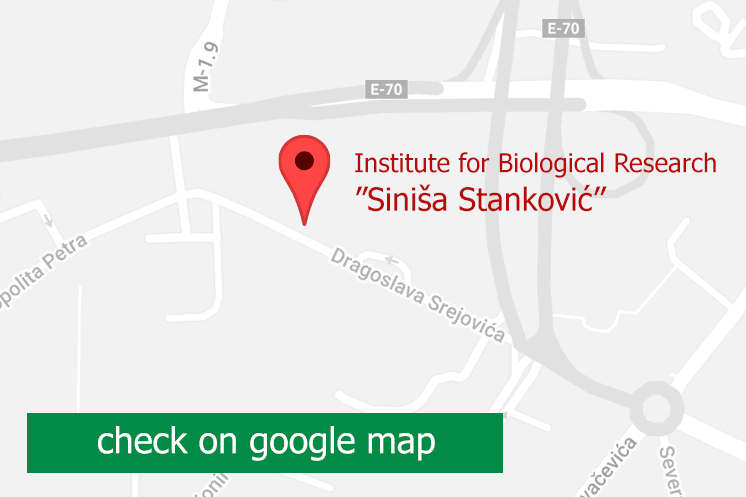
Bulevar despota Stefana 142
11108 Belgrade
Serbia


IBISS uses analytical cookies to analyze the use of the site in order to improve the user experience, by clicking "Accept" you consent to the use of cookies.